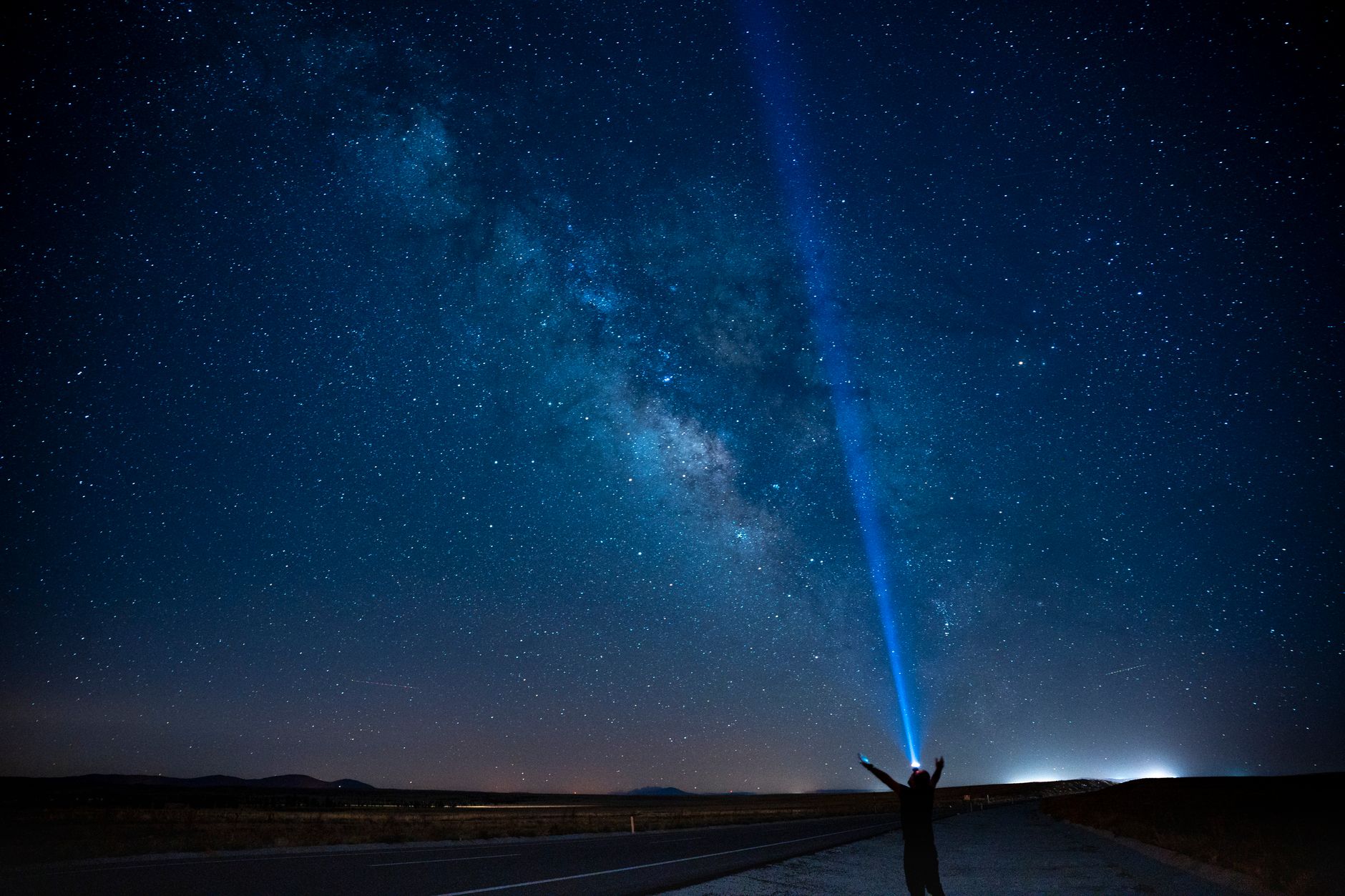
Beginner's Guide to Stargazing With Zero Equipment
New to stargazing? Here’s how to start tonight with zero equipment, no telescope needed, plus free apps, easy tips, and beginner mistakes to avoid.
You Can Start Stargazing Tonight
Here’s something most people don’t realize: you don’t need a telescope to start stargazing.
You don’t need a dark countryside location. You don’t need to spend any money at all.
All you need is a clear sky, a little patience, and about 20 minutes. This guide will show you exactly how to start tonight, with zero equipment.
What You Can See Without Any Equipment
Your eyes are more powerful than you think. On a clear night, without any gear, you can spot:
- The Moon, and all its craters and shadows
- Bright planets like Venus, Jupiter, Saturn, and Mars
- Easy-to-find constellations like the Big Dipper and Orion
- Shooting stars during meteor showers
- The glow of the Milky Way, if your sky is dark enough
That’s a lot of sky for zero cost.
Step-by-Step: How to Start Stargazing Tonight
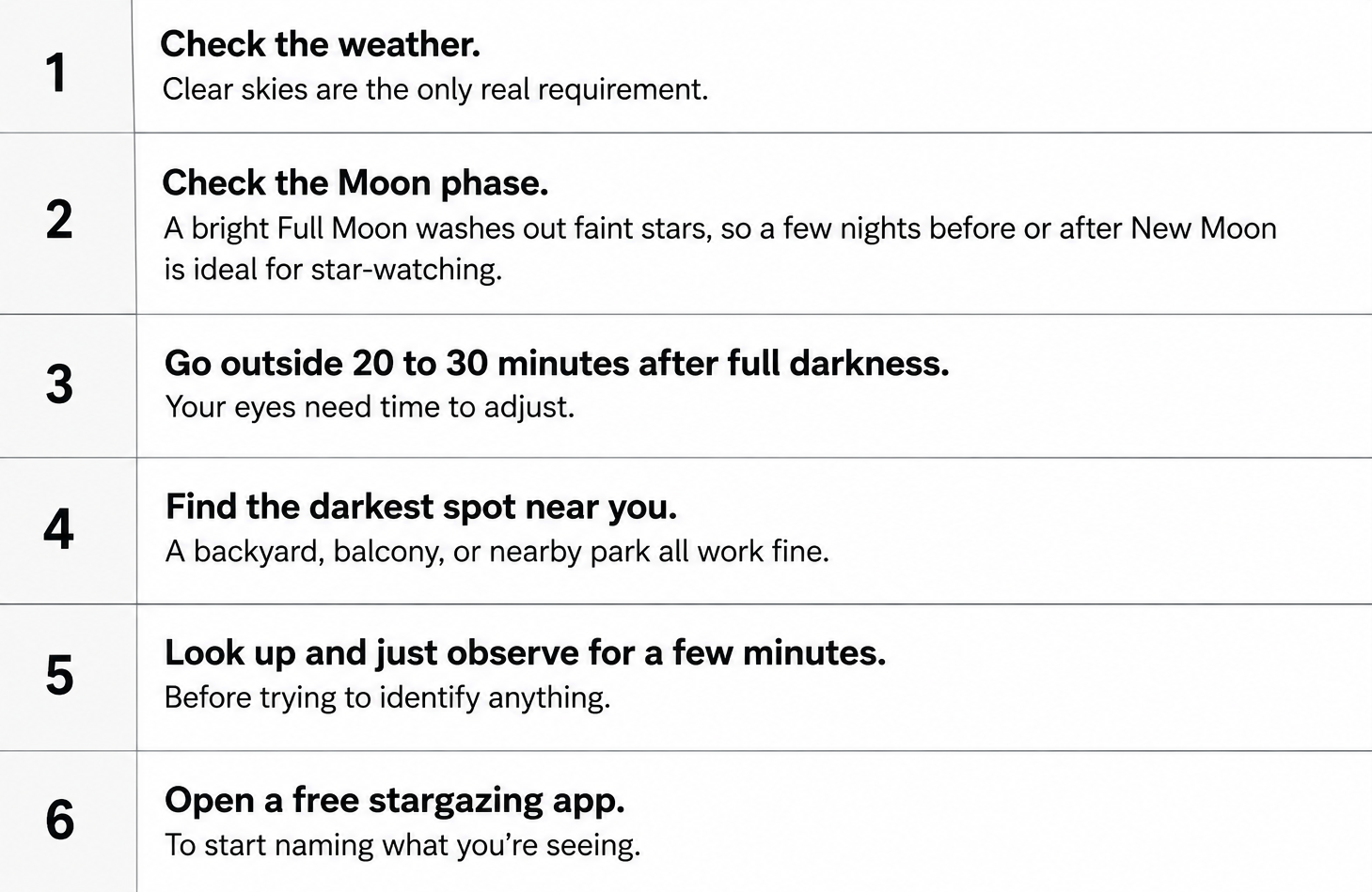
That’s genuinely the whole process. No equipment required.
Best Tips for Beginners
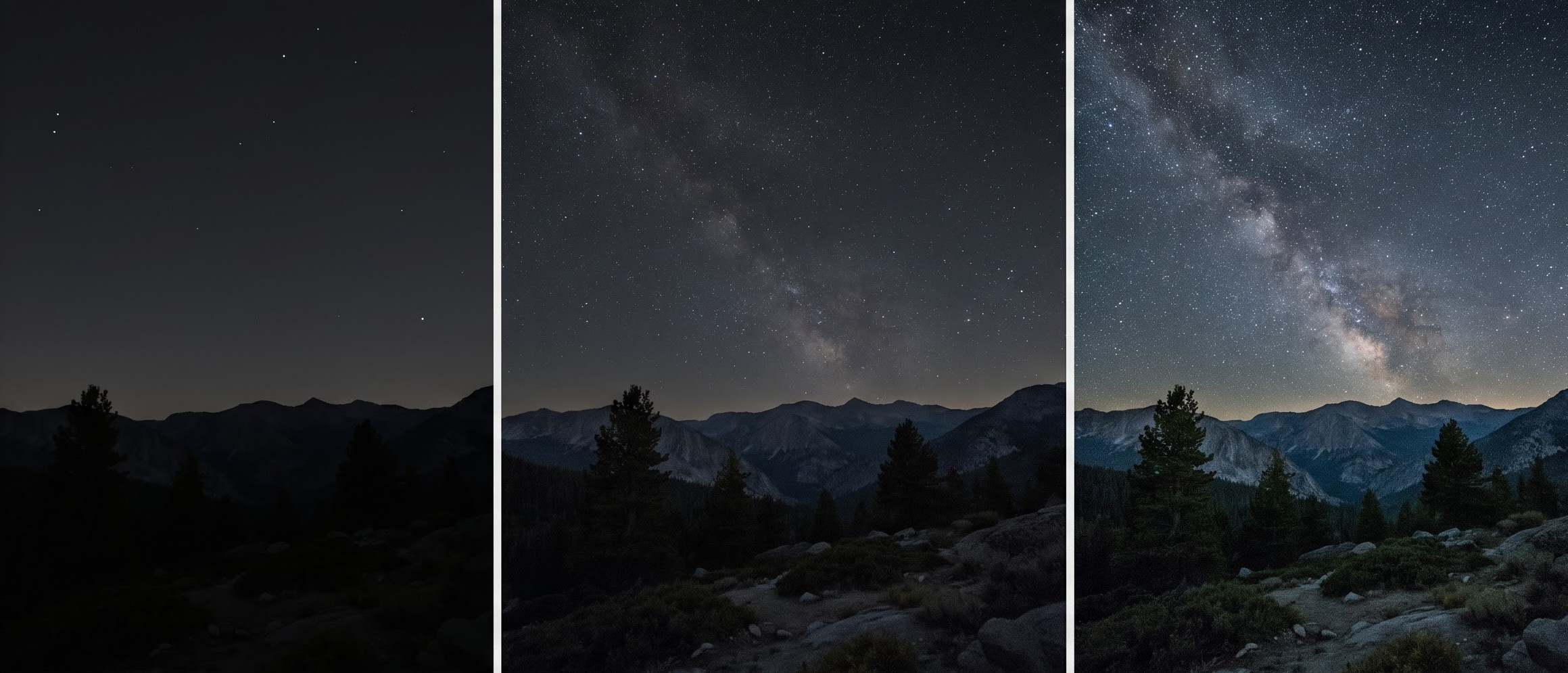
Let Your Eyes Adjust
Your eyes take about 20 to 30 minutes to fully adjust to darkness. This is called dark adaptation, and it makes a huge difference in how many stars you can see.
Avoid looking at your phone screen during this time. If you need light, use a red flashlight setting, since red light doesn’t reset your night vision the way white light does.
Get Away From Bright Lights
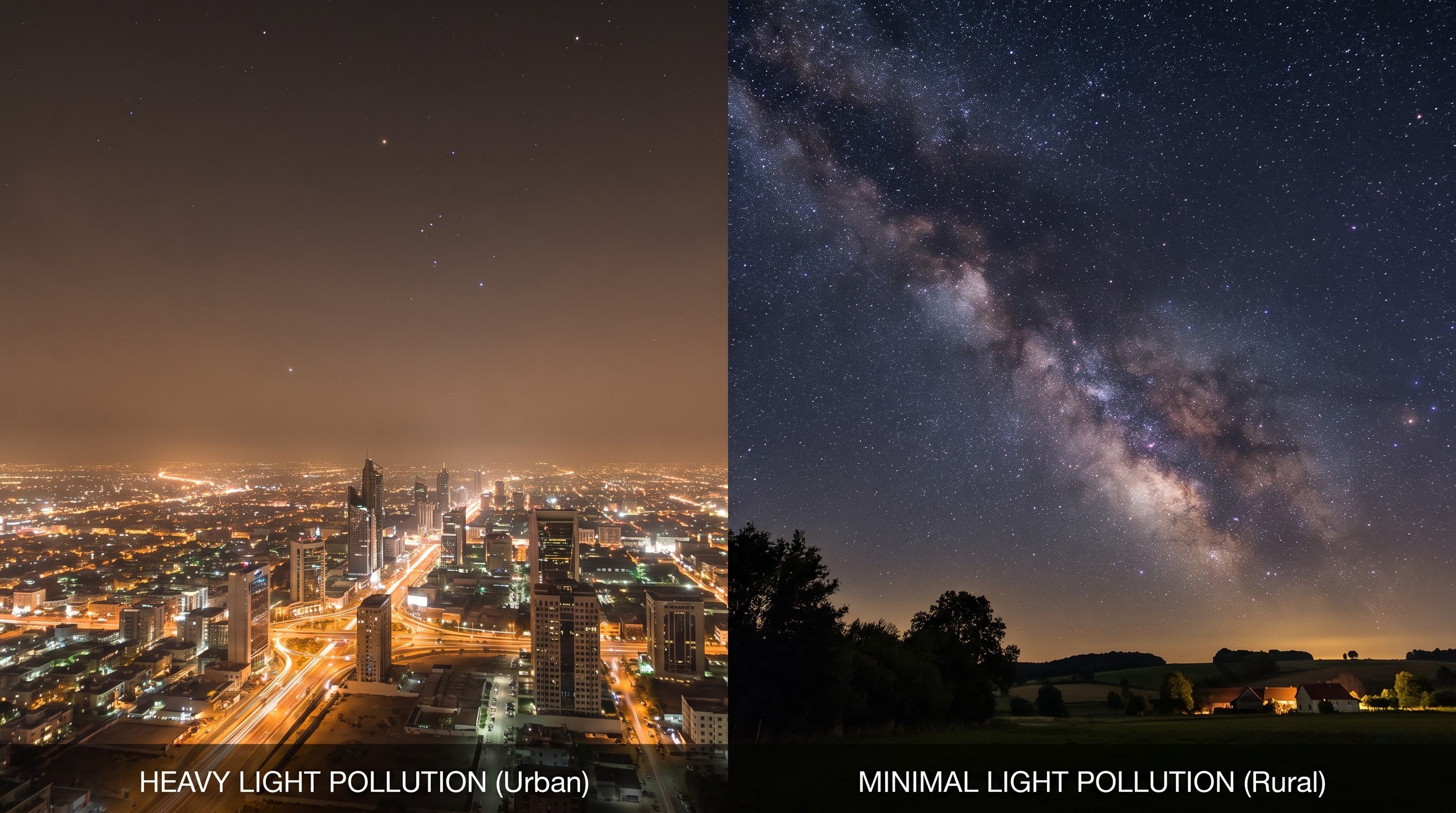
You don’t need a remote location, but moving even a short distance from streetlights makes a real difference. Standing in a shadow, behind a building, or in a park away from lamp posts all help.
Pick the Right Time
The best stargazing happens:
- On clear, cloudless nights
- A few days before or after the New Moon
- Later in the evening, once the sky is fully dark
- Away from bright artificial lights
Recommended Free Apps
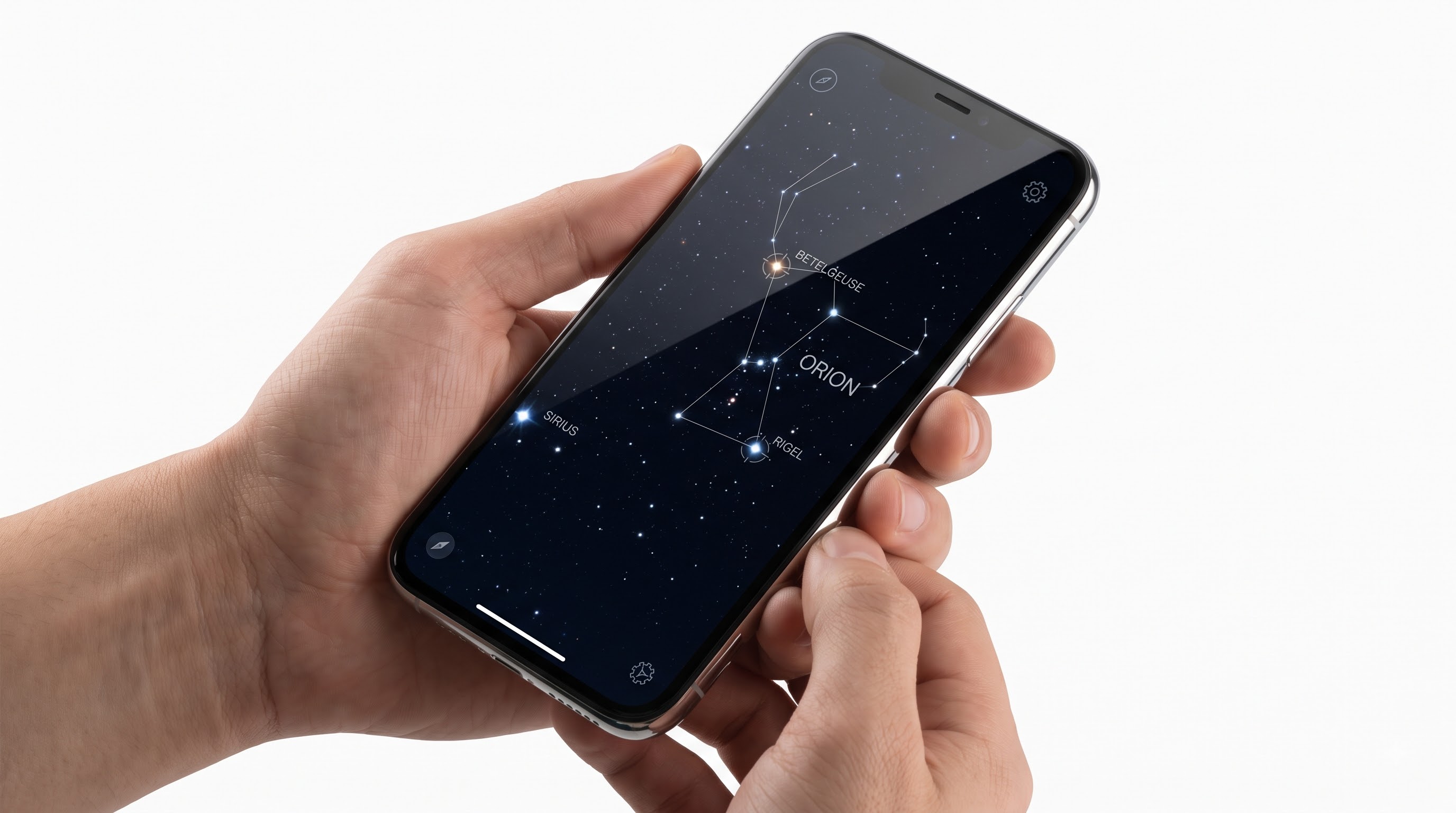
You don’t need to memorize the sky. Free apps do the identifying for you, just point your phone up and it tells you what you’re looking at.
- Stellarium — detailed and beginner-friendly (Play Store / App Store)
- SkyView — simple augmented reality star finder (Play Store / App Store)
- Star Walk — clean design, great for total beginners (Play Store / App Store)
- Night Sky — popular iOS option with helpful alerts (App Store)
Pick any one of these, and you’re ready to go.
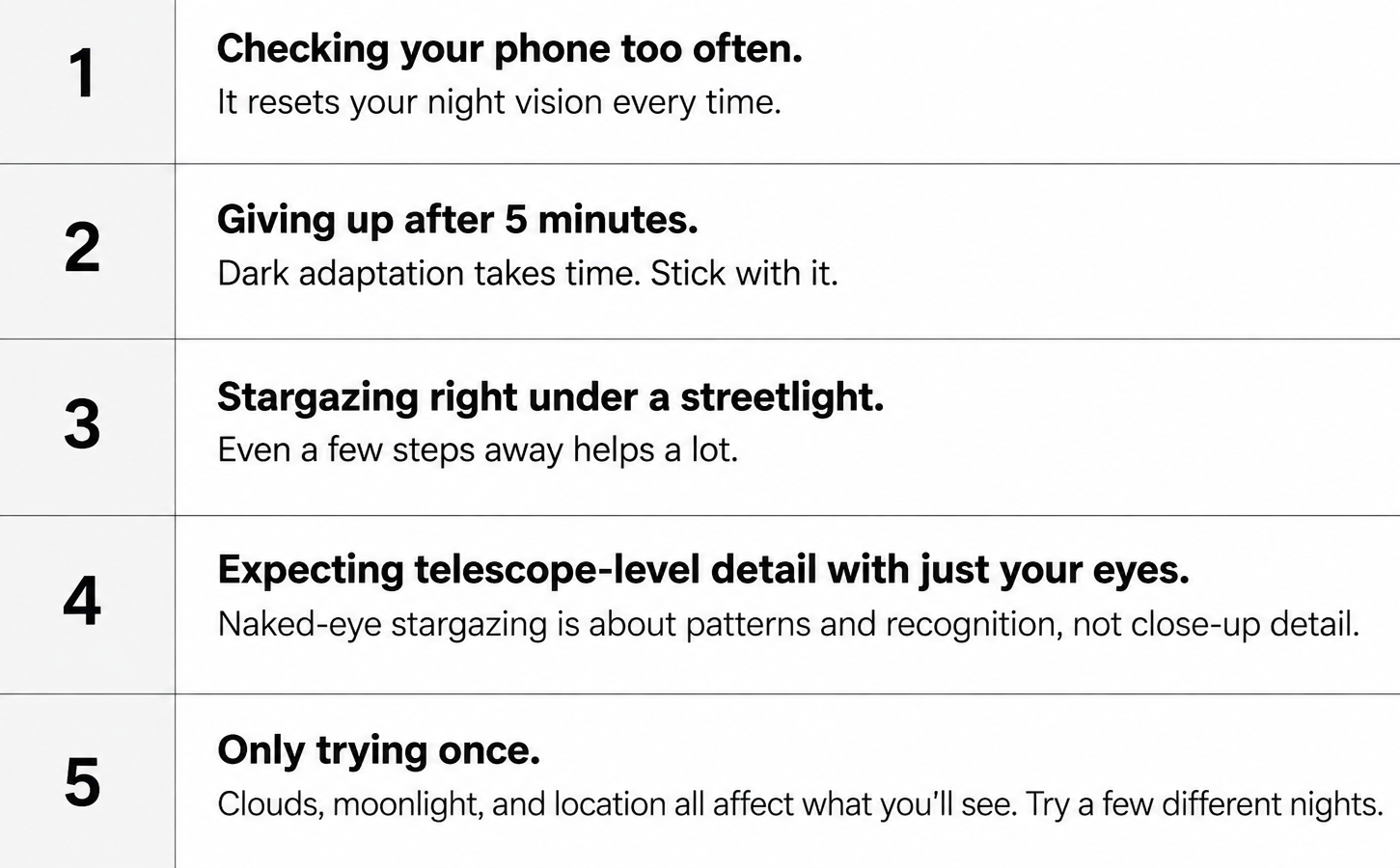
Common Beginner Mistakes to Avoid
Simple Things to Find First

Start with the easiest targets before hunting for anything advanced.
The Moon. Always the easiest and most rewarding target, especially near a Full Moon.

Bright planets. Venus and Jupiter are often the brightest points of light in the sky, easy to mistake for very bright stars.

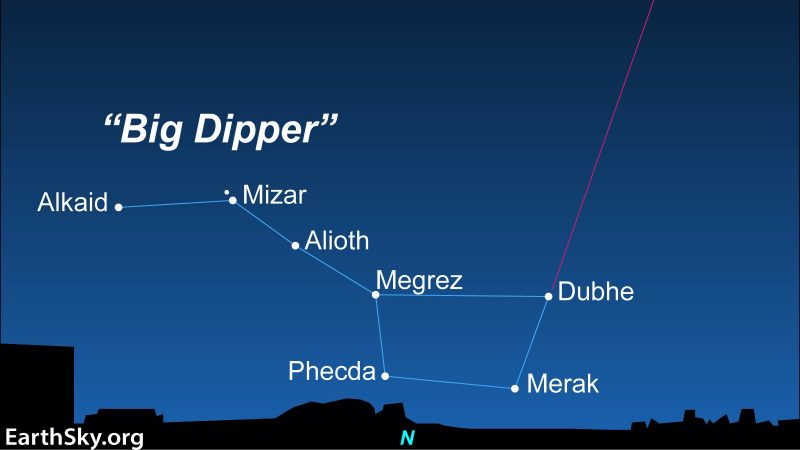
The Big Dipper. A simple, easy-to-recognize pattern of seven stars, useful for finding other constellations too.
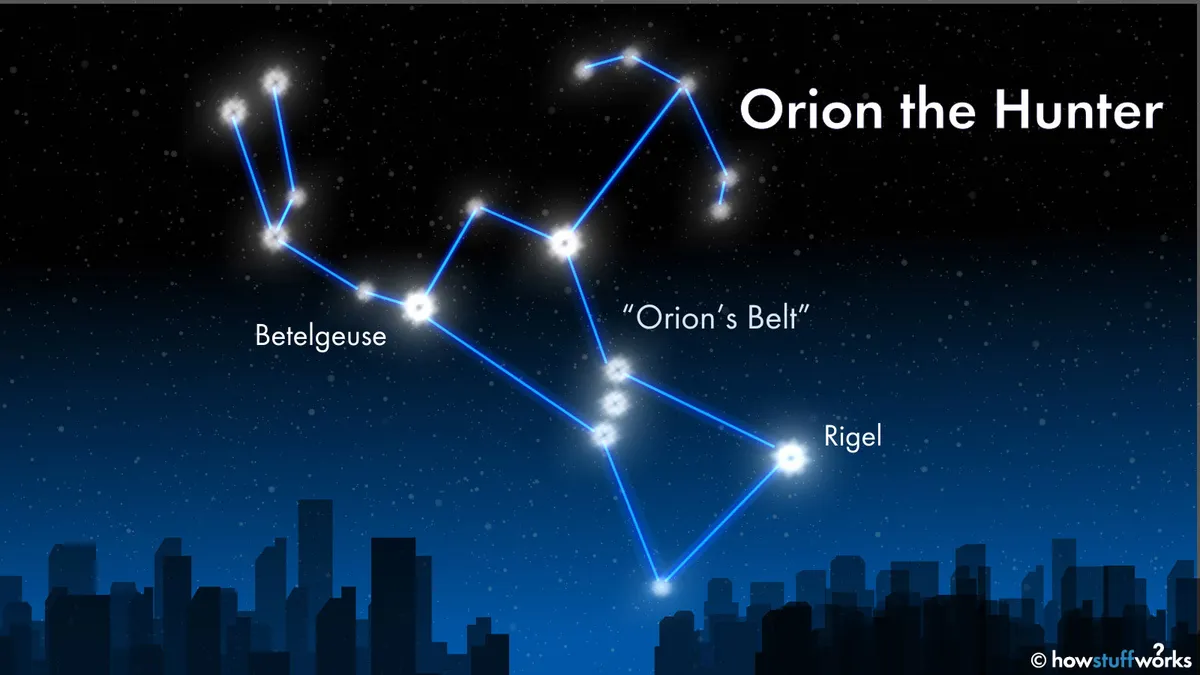
Orion. Recognizable by its three-star belt in a neat row, one of the easiest constellations for beginners to spot.
When Should You Buy Equipment?
Here’s the honest, light answer: not yet.
Spend a few weeks enjoying naked-eye stargazing first. Learn a handful of constellations, track the Moon’s phases, and get comfortable with a stargazing app. Only once you find yourself wanting more detail, especially on the Moon or planets, is it worth considering binoculars, which are cheaper and more beginner-friendly than a telescope.
Conclusion: Go Outside Tonight
Stargazing doesn’t need to wait until you own a telescope. It doesn’t need a perfect dark-sky location, either. All it takes is a clear night, 20 minutes for your eyes to adjust, and a willingness to look up.
Start tonight. Find the Moon, spot a bright planet, and try tracing the Big Dipper. Once you’re ready to go deeper, check out our September 2026 Night Sky Guide, our Harvest Moon 2026 guide, and our guide to seeing Neptune at its best, all written for exactly this stage of your stargazing journey.
Written By

Satyam Patel
15-year-old space enthusiast and Founder of Solar System Explorers. I simplify space science for everyone.
satyam@solarsystemexplorers.com