Hidden Comet Photo Reveals Rare Naked Surface View
A comet sat unnoticed in public telescope data for a decade before astronomers found it stripped bare, giving a rare look at its surface.
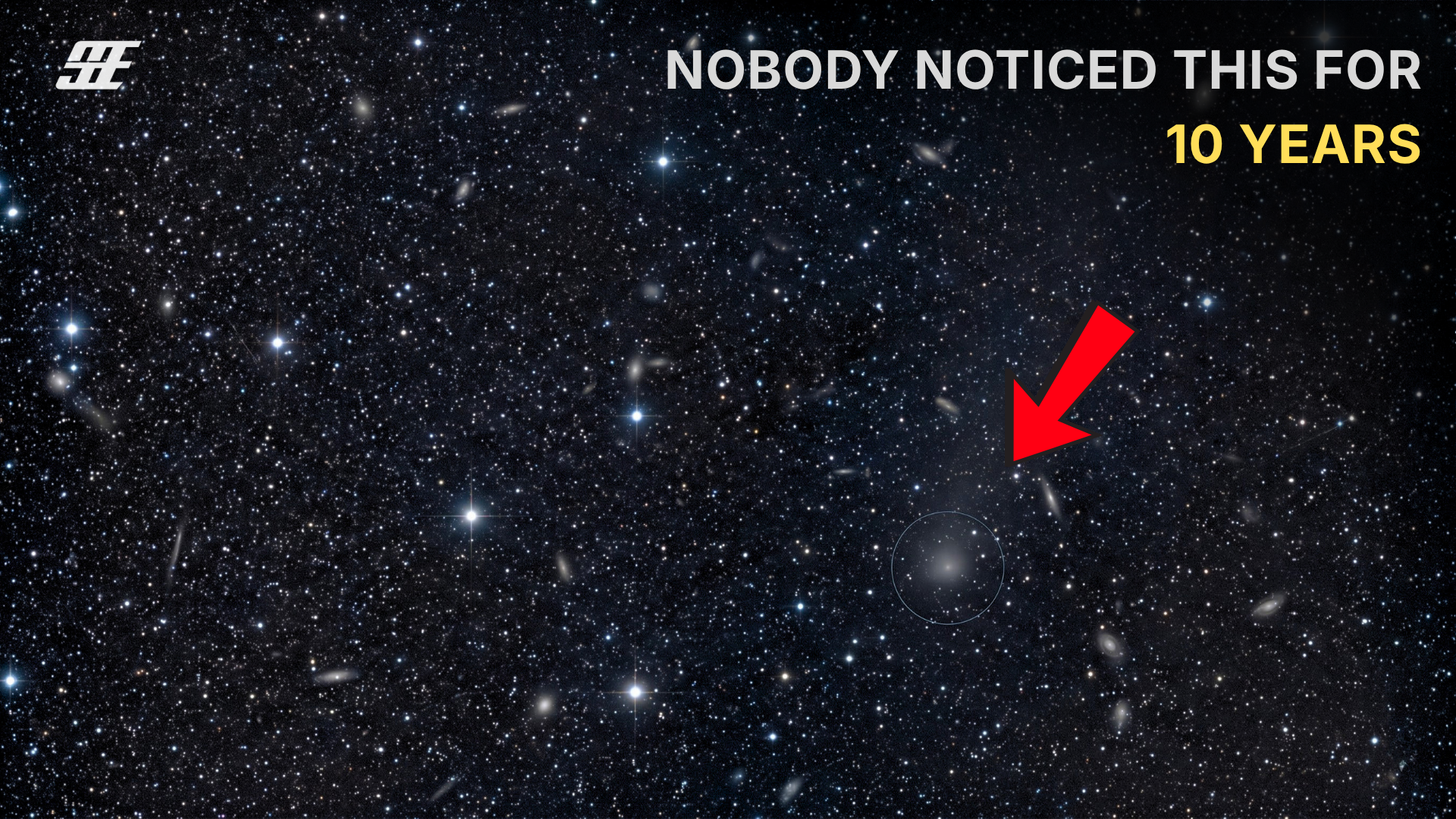
In 2016, a comet drifted into the background of a routine telescope photo, and nobody noticed. It sat quietly in public archive data for a decade until astronomers finally spotted it this year, stripped bare of its usual glowing cloud, giving them a rare direct look at a comet’s actual surface.
The comet is called 28P/Neujmin, and the photo that captured it wasn’t even trying to. It was one of thousands of images taken by the Hyper Suprime-Cam, a wide-field camera mounted on Japan’s 8.2-meter Subaru Telescope in Hawaii, as part of a massive public sky survey. The comet simply happened to drift through the frame, went unnoticed for ten years, and turned out to be one of the cleanest views of a comet’s nucleus astronomers have ever gotten from the ground.
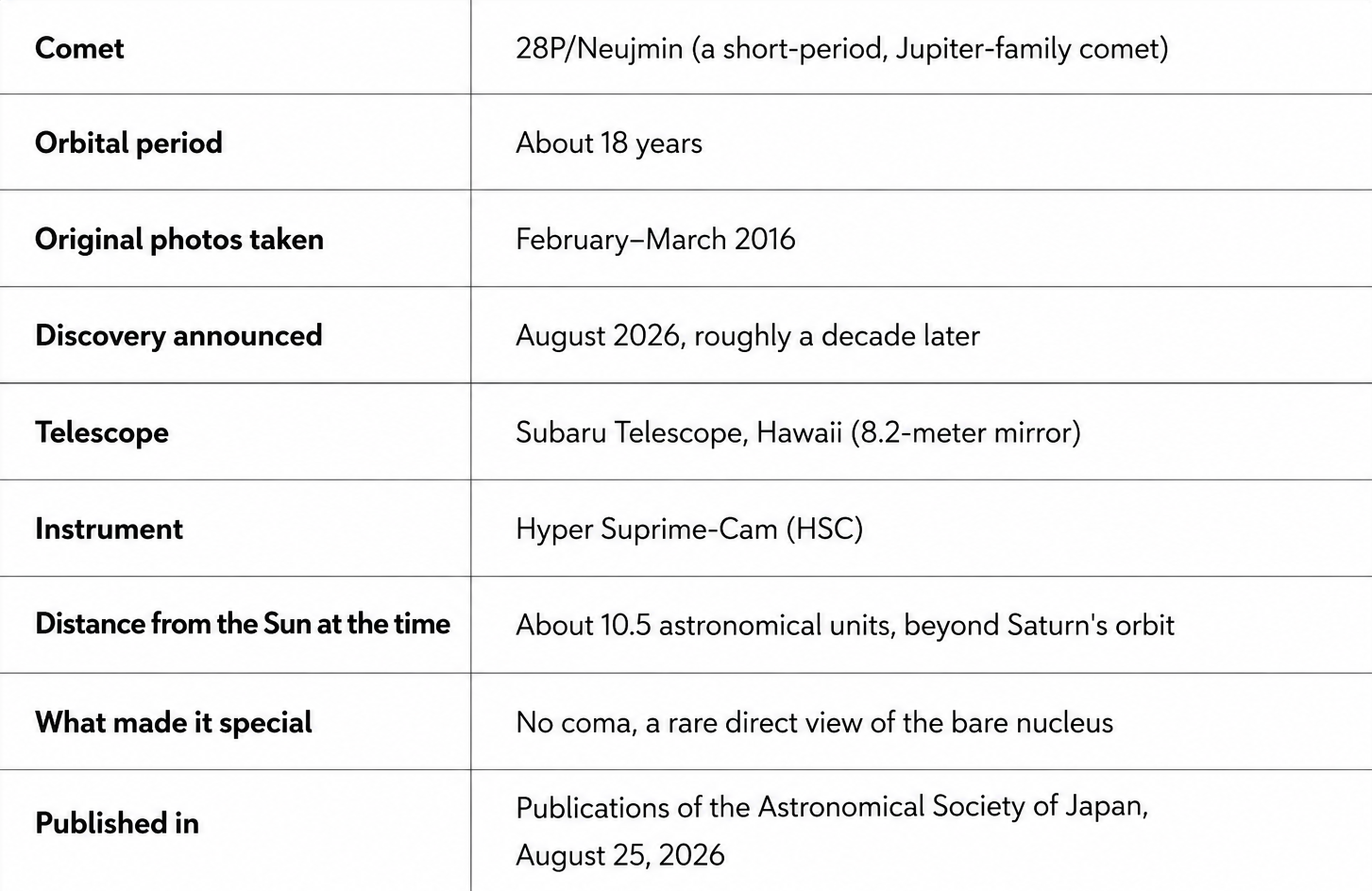
Quick Facts: The Hidden Comet Discovery
Why Comets Are So Hard to See Clearly
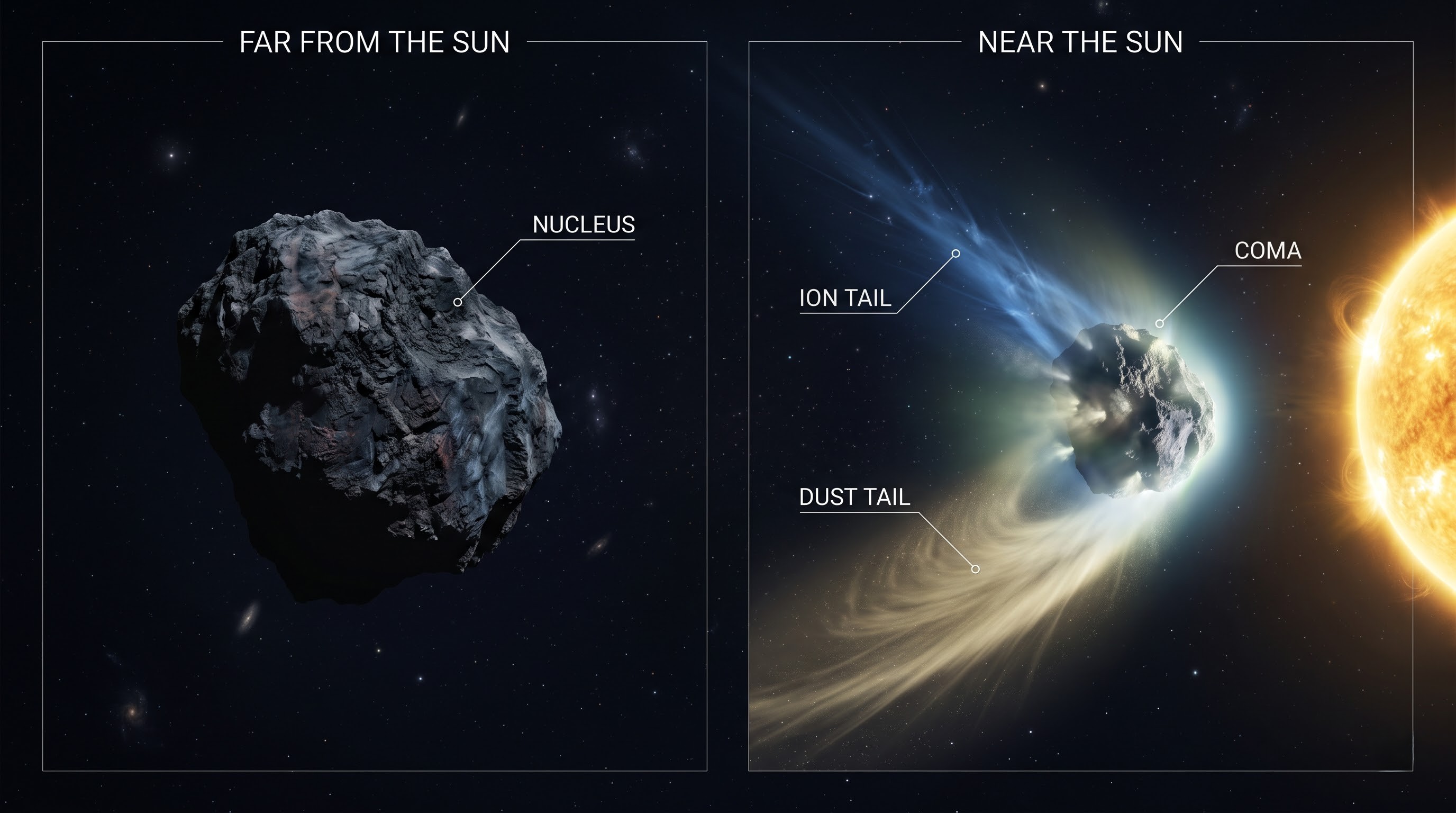
Most of the comet images people are familiar with, bright fuzzy heads trailing long glowing tails, aren’t actually pictures of the comet itself. They’re pictures of the coma, a cloud of gas and dust that forms when a comet gets close enough to the Sun for its ices to start vaporizing. That cloud can stretch for thousands of miles, and it completely hides the solid nucleus underneath.
For astronomers who actually want to study what a comet’s surface looks like, the coma is a problem. The only reliable way around it is to catch a comet while it’s still far from the Sun, cold enough that its ices stay frozen and no coma has formed yet. The trouble is that comets are extremely faint at those distances, which makes them difficult to find and even harder to study in detail.
A Decade-Old Photobomb
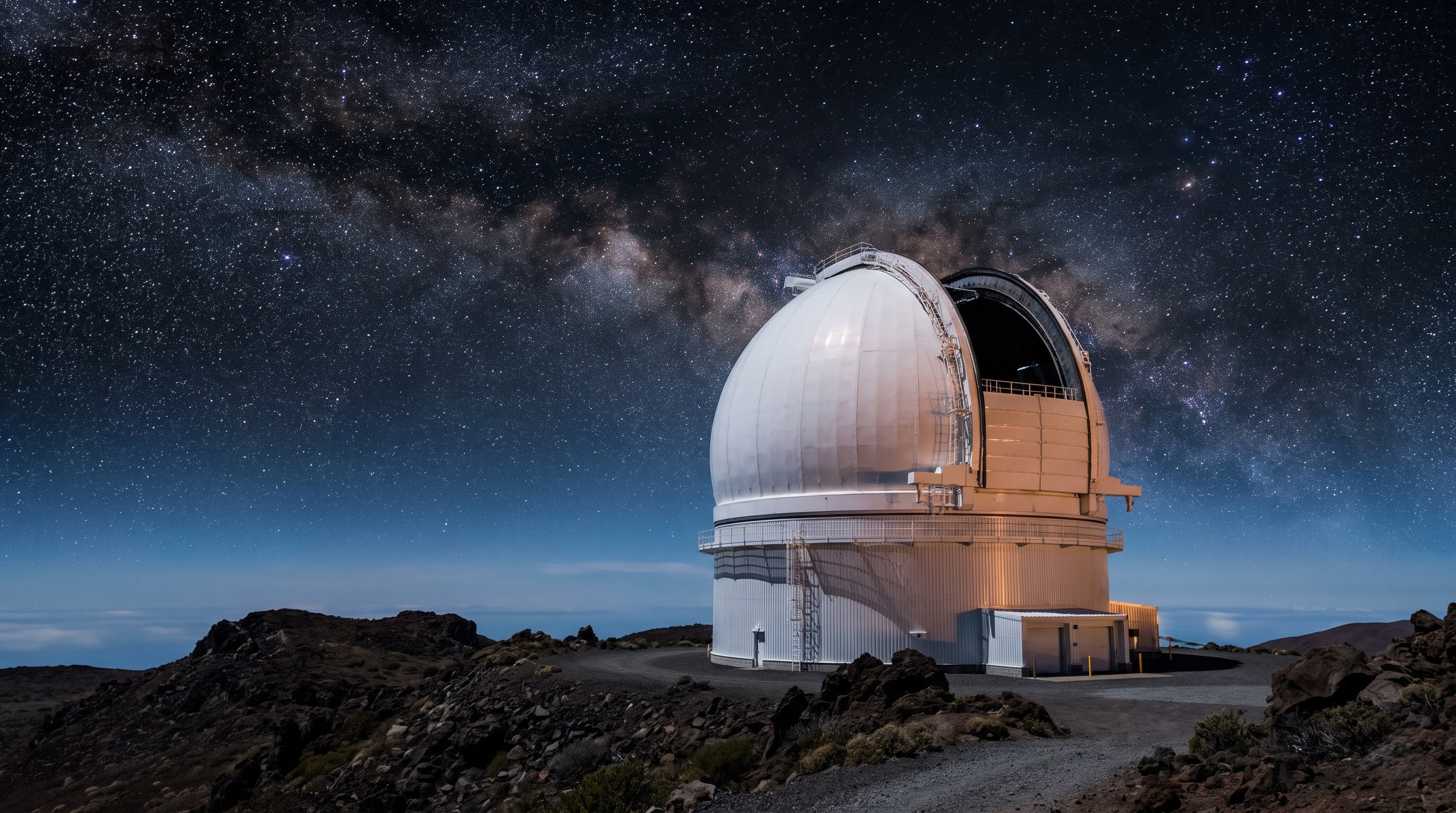
This is exactly what happened with 28P/Neujmin, almost by accident. Back in February and March of 2016, the Subaru Telescope’s Hyper Suprime-Cam was busy photographing wide patches of sky for an unrelated survey project. The comet happened to be sitting about 10.5 astronomical units from the Sun at the time, far beyond Saturn’s orbit, cold and completely inactive. It showed up in three of the survey’s images as nothing more than a faint, sharp point of light, with no coma at all.
Nobody was looking for it, and nobody noticed it for years. The Subaru Telescope’s archive is public, meaning anyone can search through its enormous library of images long after they were taken. A team of researchers, led by astronomer Takafumi Ootsubo, was combing through that archive specifically looking for solar system objects that might have wandered into frame unnoticed. In one of those old 2016 exposures, they found 28P sitting there, undisturbed, exactly where it had been for a decade.
What Made This View So Rare
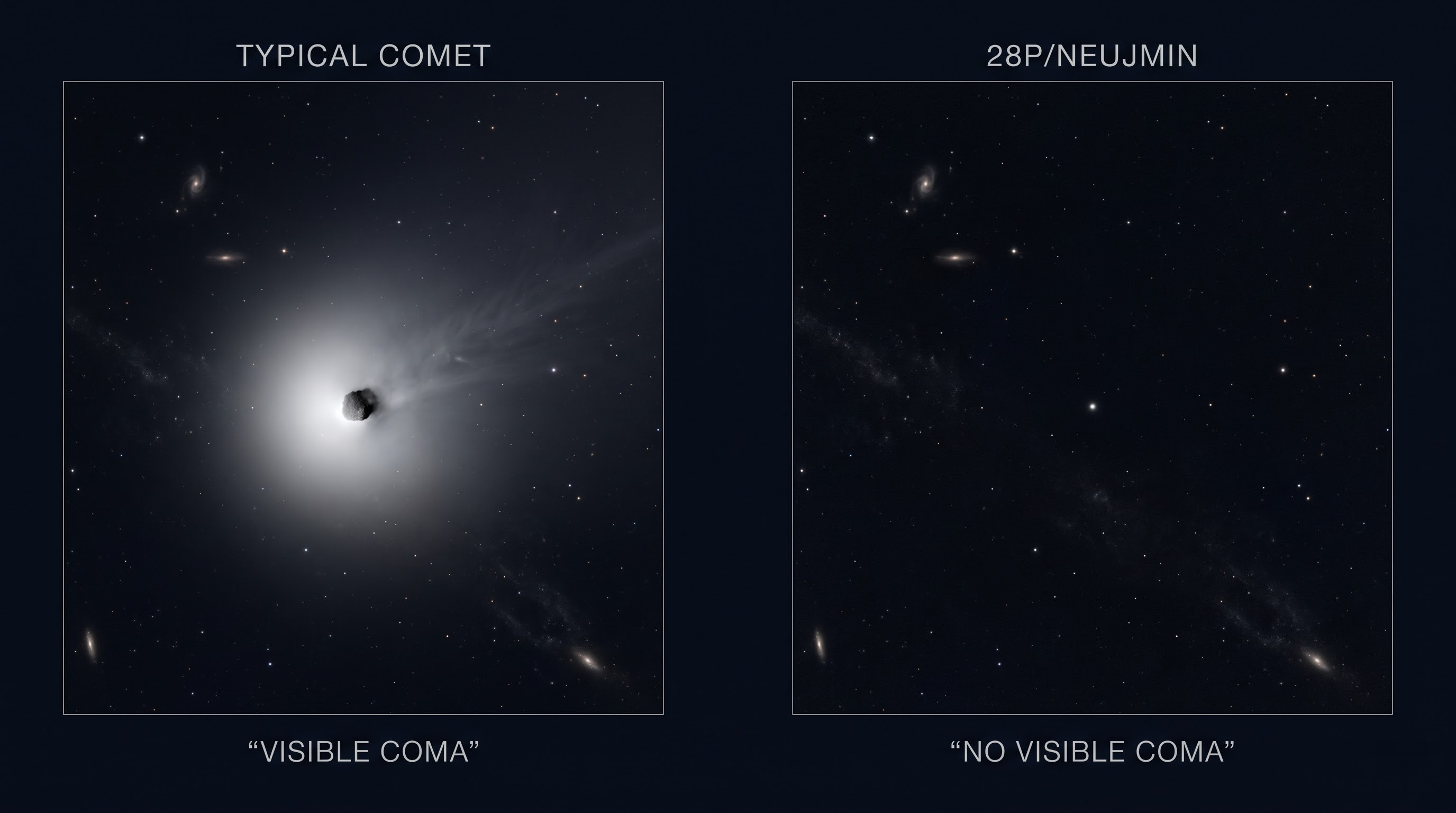
Because 28P was so far from the Sun and completely free of coma contamination, the research team could study its nucleus directly, something that’s genuinely difficult to do from the ground. Using the comet’s brightness across three different color filters, they measured its surface properties and found that its color closely resembles D-type asteroids, a class of small, dark, reddish bodies thought to have formed in the outer solar system.
The team also measured something called the opposition effect, a sudden surge in brightness that happens when an object is observed almost exactly opposite the Sun in the sky. The strength of that brightness surge can reveal clues about how porous or textured a surface is, and the researchers found that 28P’s nucleus shows a stronger opposition effect than is typical for asteroids of a similar type, hinting at a surface structure that isn’t quite like anything else that’s been measured this way.
Why This Discovery Matters
Beyond the details of one comet, this discovery is really a proof of concept. Massive telescope archives like Subaru’s already contain millions of images taken for entirely different scientific purposes, and hidden inside them are almost certainly more comets, asteroids, and other objects that nobody has ever noticed. As Ootsubo put it, “the same archive likely contains many more Solar System objects waiting to be found.”
The team now plans to search for other bare comets hiding in plain sight the same way, hoping that a growing collection of clean, coma-free surface measurements could reveal how comet nuclei change over time, and in turn, offer new clues about how the solar system’s smallest bodies formed billions of years ago.
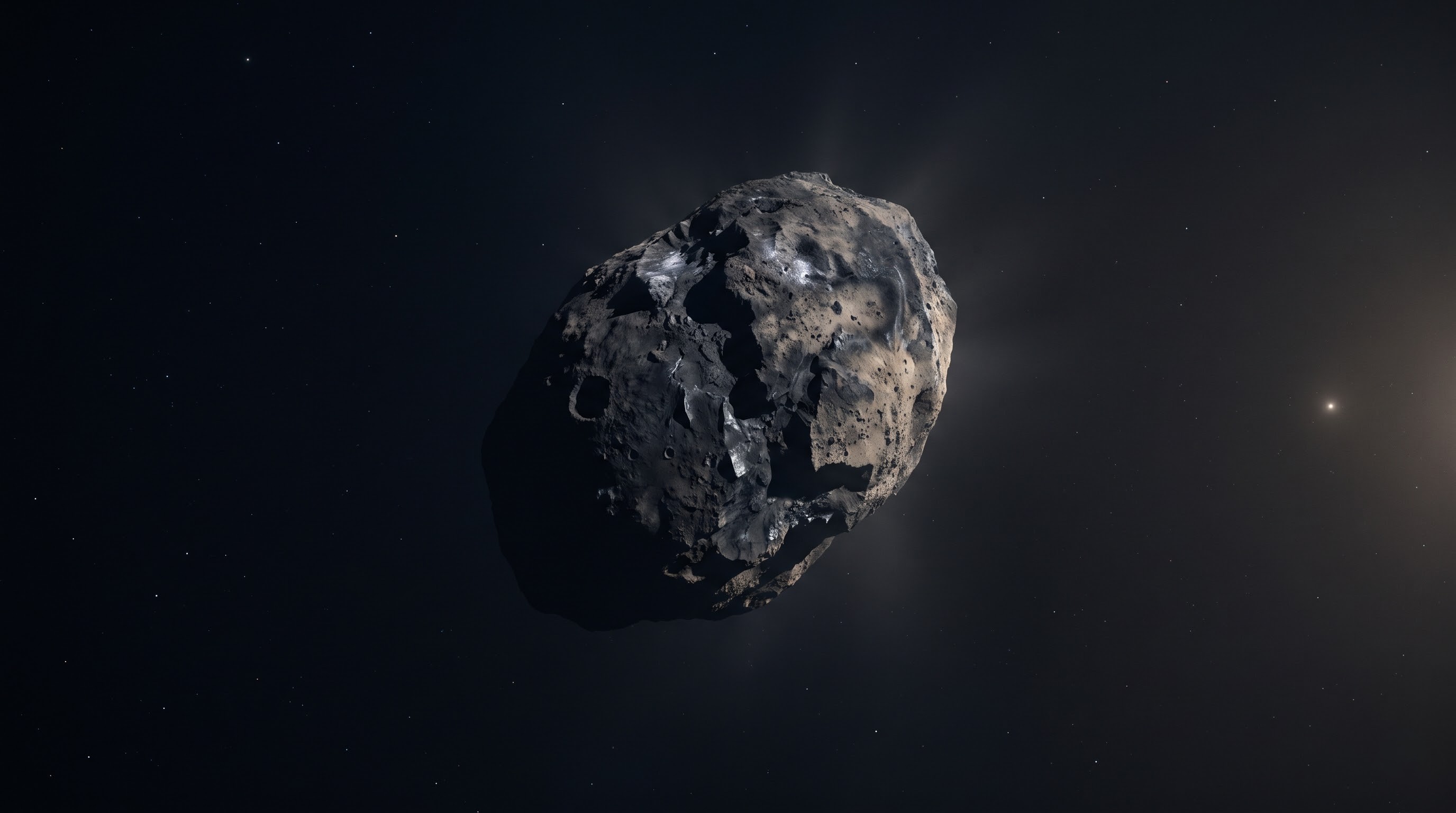
Ten years is a long time for anything to sit unnoticed, especially something drifting through a photo meant for an entirely different purpose. But for one quiet comet, ten years of being overlooked turned out to be exactly what let astronomers finally see it clearly.
Written By

Satyam Patel
15-year-old space enthusiast and Founder of Solar System Explorers. I simplify space science for everyone.
thesatyamempire@gmail.com