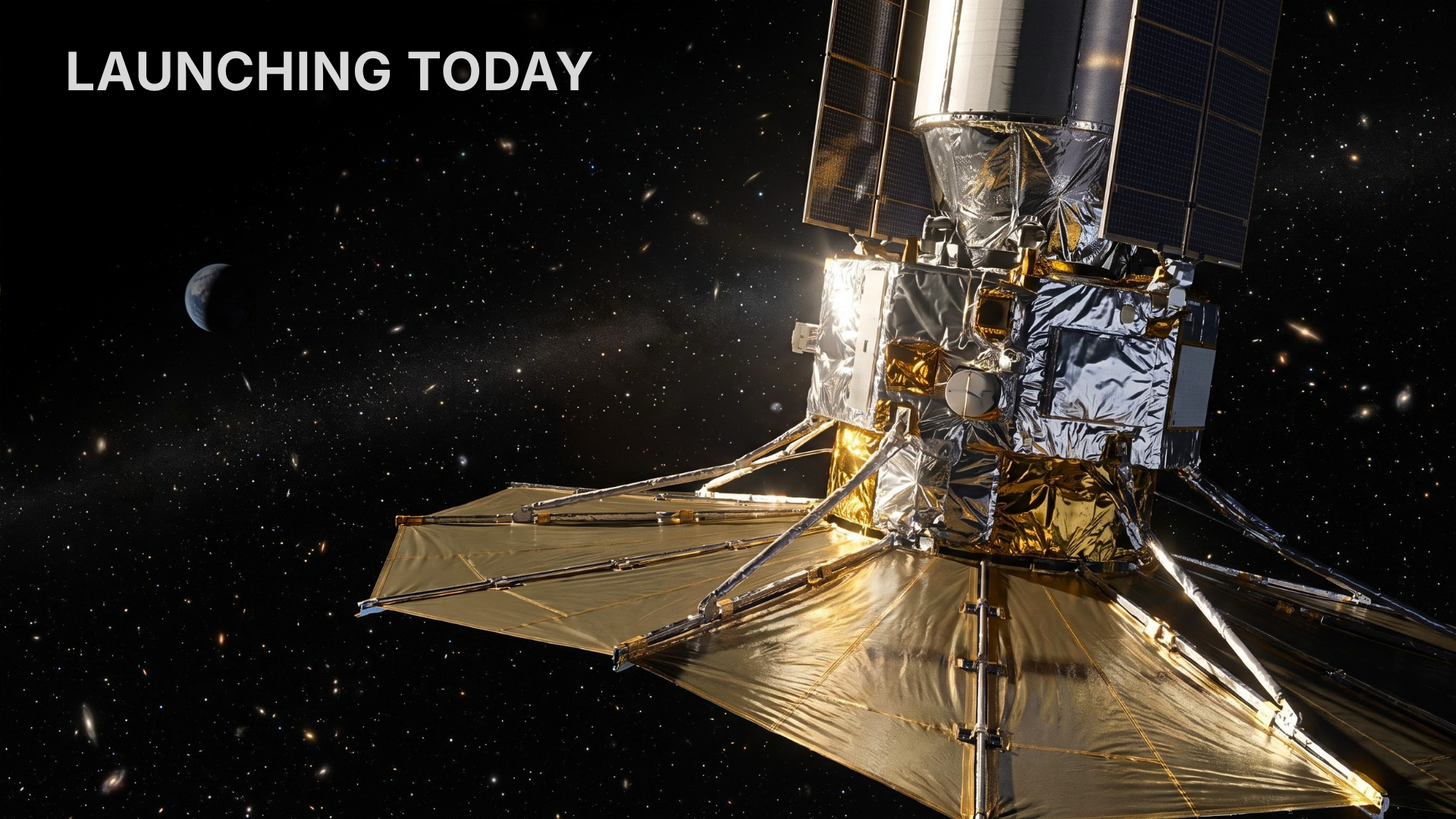
A telescope launching today could out-map 30 years of Hubble
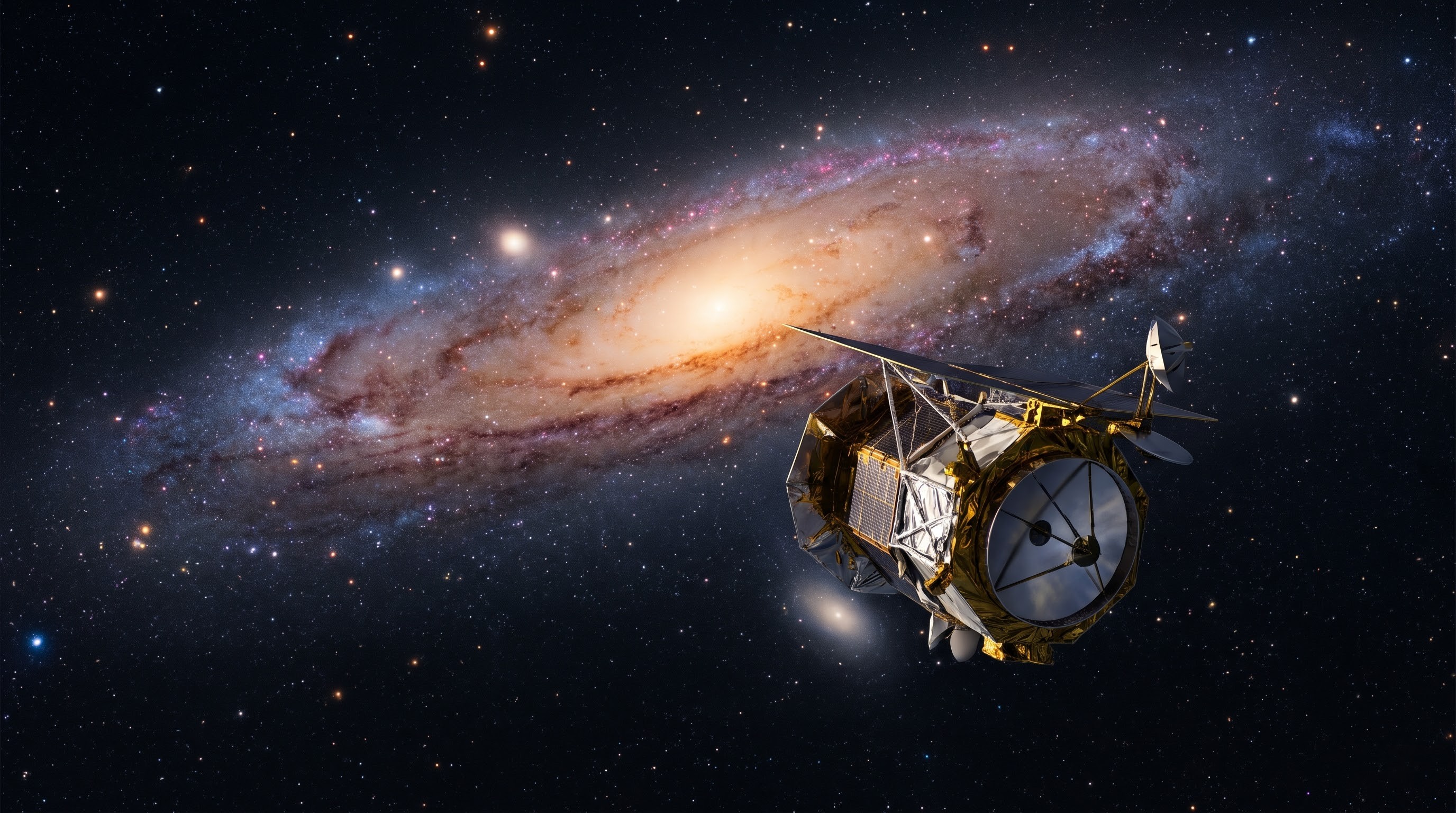
NASA is launching the Roman Space Telescope today, carrying the same size mirror as Hubble, but a field of view 100 times wider. In just its first five years, it’s expected to photograph more of the sky than Hubble managed in three decades. Its job, hunt dark energy, dark matter, and thousands of hidden planets.
Today, NASA is launching the Roman Space Telescope, carrying the same size mirror as Hubble, but a field of view 100 times wider. In just its first five years, it’s expected to photograph more of the sky than Hubble managed in three decades. Its job: hunt dark energy, dark matter, and thousands of hidden planets.
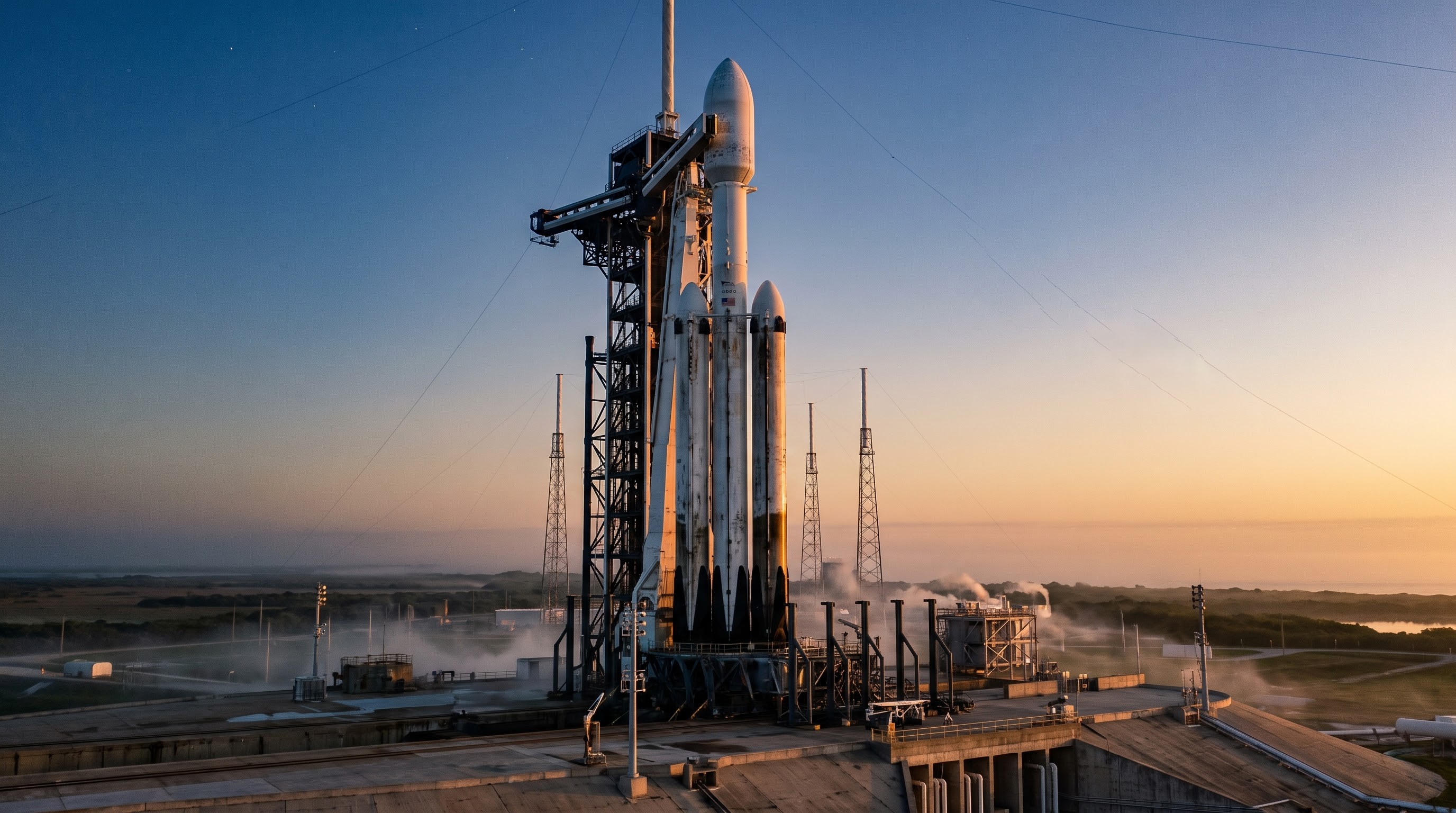
The mission lifted off aboard a SpaceX Falcon Heavy rocket from Launch Complex 39A at NASA’s Kennedy Space Center in Florida, on a Sunday morning that NASA scientists have been counting down to for years, some of them for most of their careers.
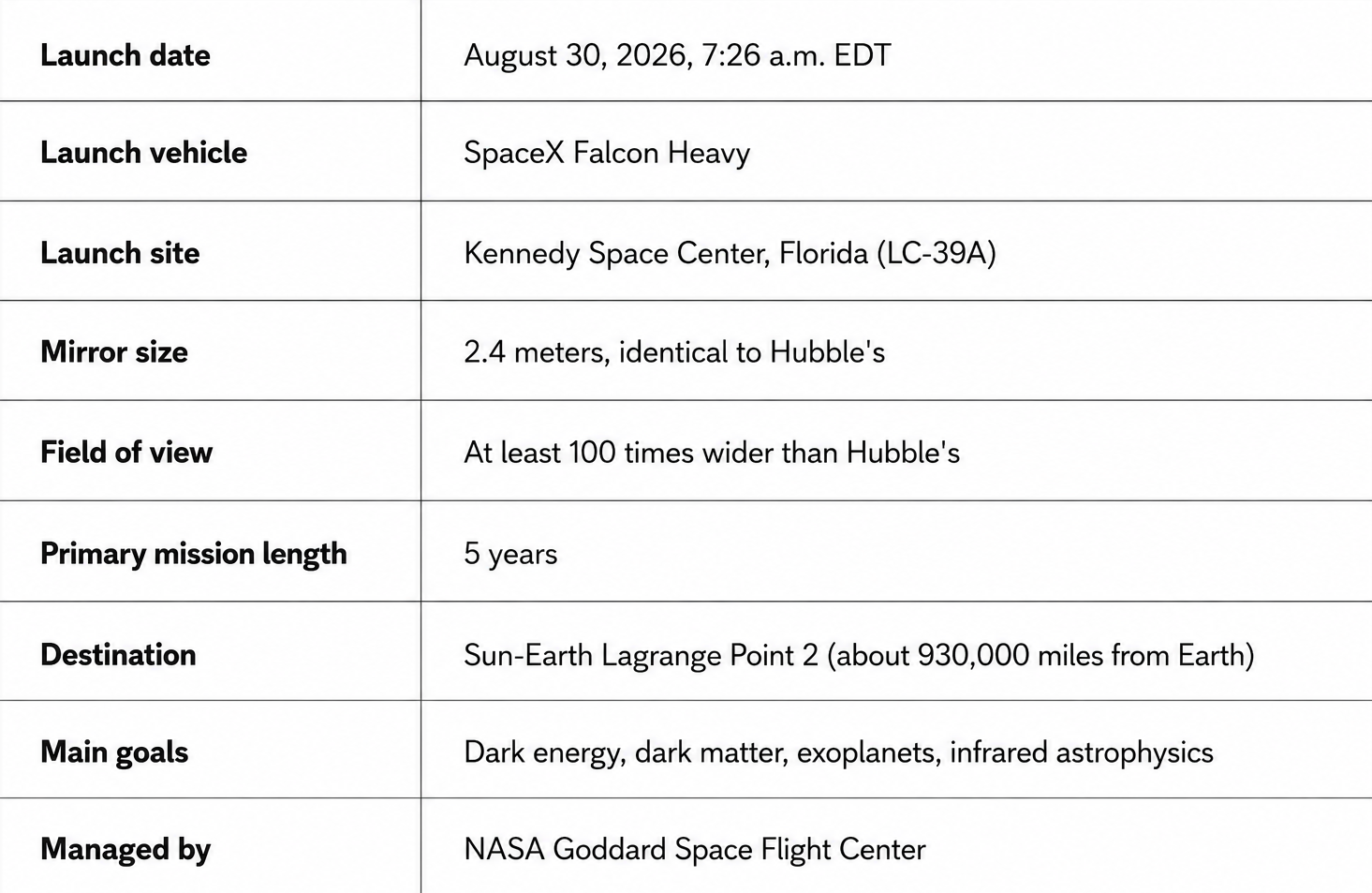
Quick Facts: Roman Space Telescope
Same Mirror as Hubble, a Completely Different Kind of Vision
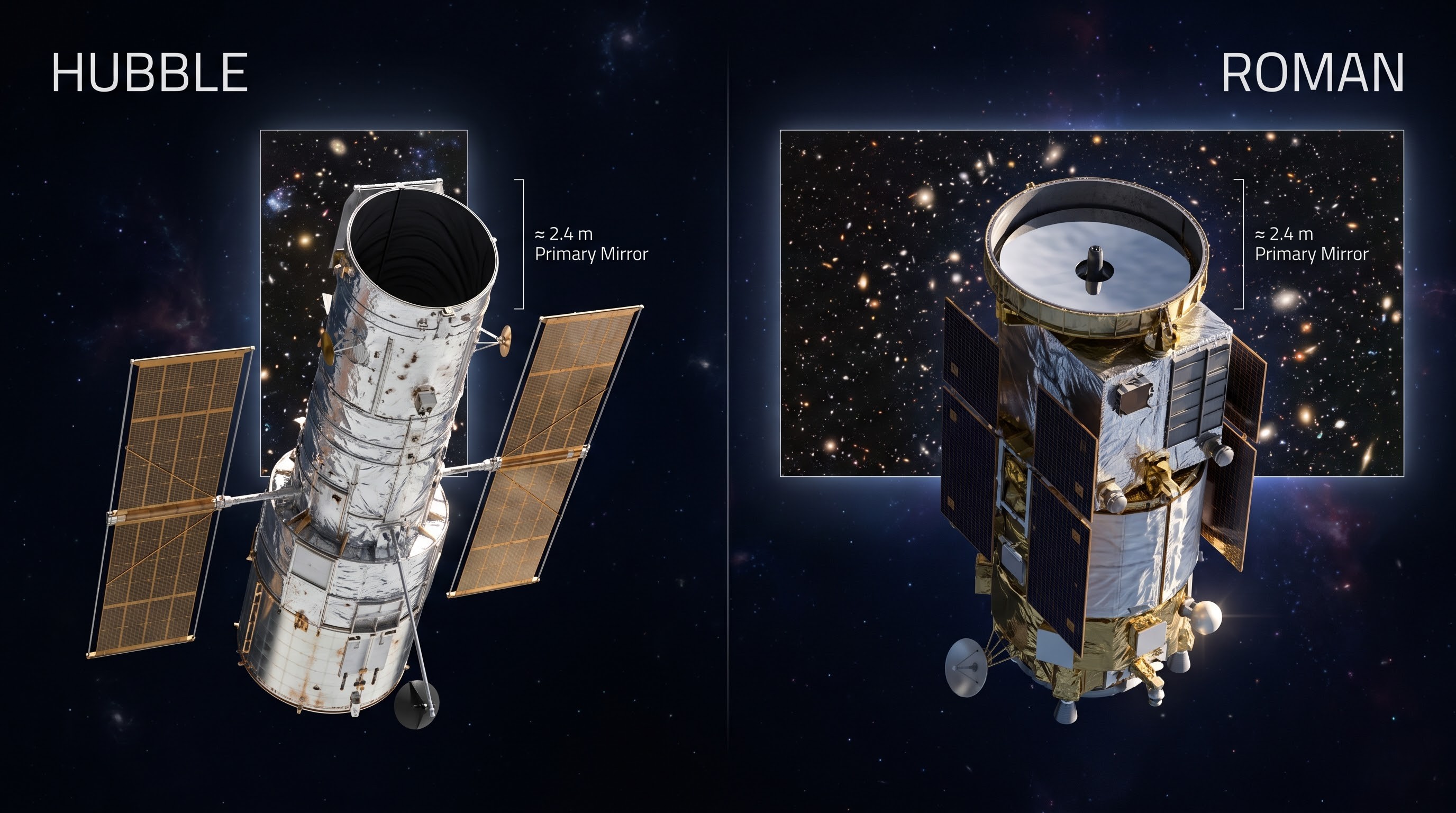
It’s a strange fact that trips people up: Roman’s primary mirror is the exact same size as Hubble’s, 2.4 meters across. If the two telescopes were sitting side by side, their main mirrors would look nearly identical.
The difference is what happens after the light hits that mirror. Hubble was built to zoom in tight, capturing small, incredibly detailed patches of sky one at a time. Roman was built to do the opposite. Its camera can capture a field of view at least 100 times larger than Hubble’s in a single shot, while preserving Hubble-level image sharpness across that entire wider frame.
That combination, Hubble’s resolution paired with a dramatically wider lens, is what lets scientists expect Roman to image more of the sky in its five-year primary mission than Hubble has managed across more than three decades in orbit.
Three Mysteries Roman Was Built to Solve
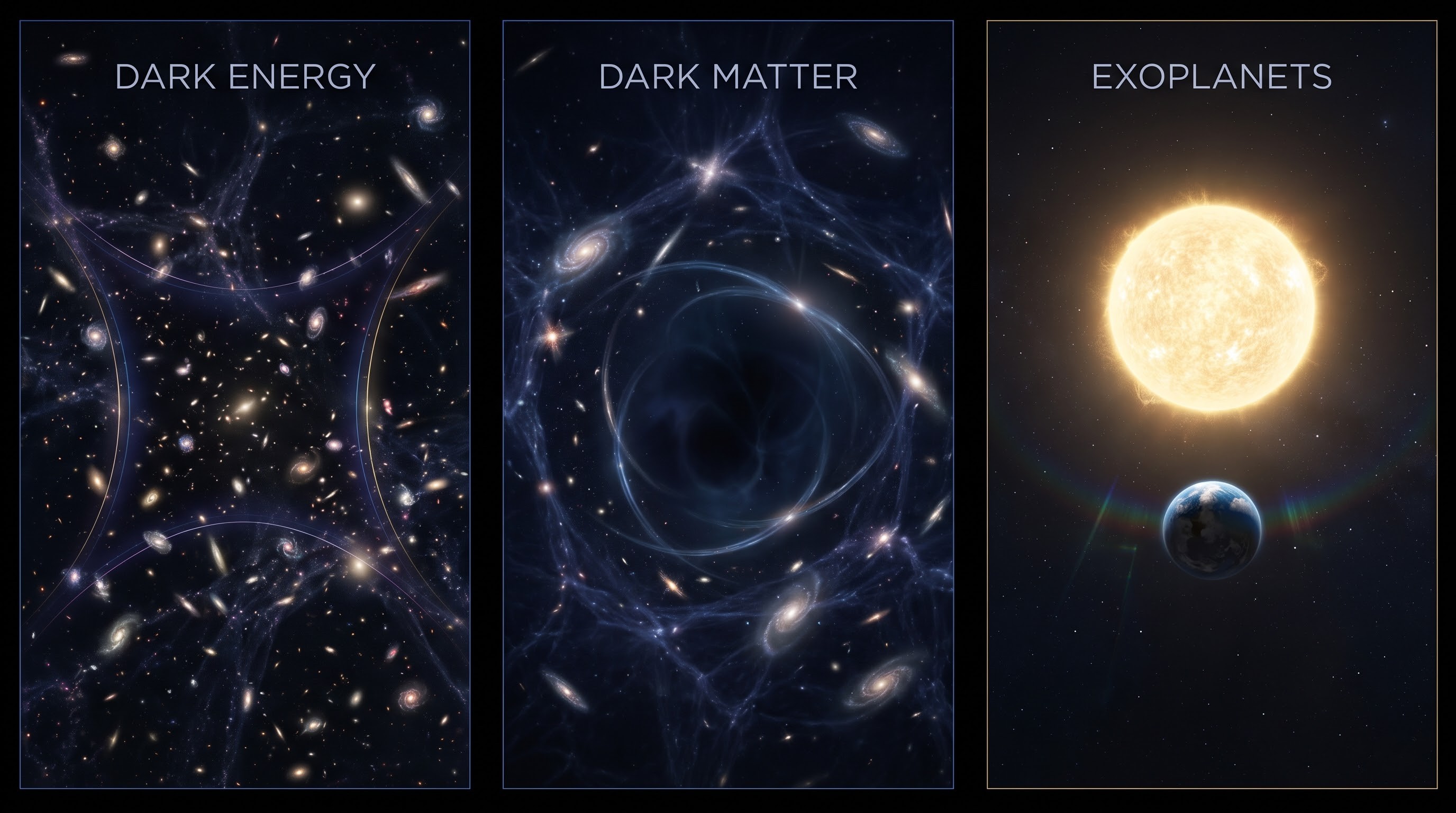
Roman’s science mission comes down to three big open questions in astrophysics.
Dark energy. By mapping the positions and distances of millions of galaxies across huge swaths of sky, Roman will track how dark energy, the mysterious force accelerating the universe’s expansion, has shaped cosmic structure over billions of years.
Dark matter. Roman will study how invisible dark matter has influenced the growth and movement of galaxies, using the same enormous galaxy surveys that inform its dark energy research.
Exoplanets. Rather than searching star by star, Roman will use a technique called gravitational microlensing, watching for the subtle gravitational fingerprint a planet leaves when it passes in front of a distant background star. This method is expected to reveal thousands of new exoplanets, including many free-floating planets that drift through space untethered to any star at all.
The Long Road to L2
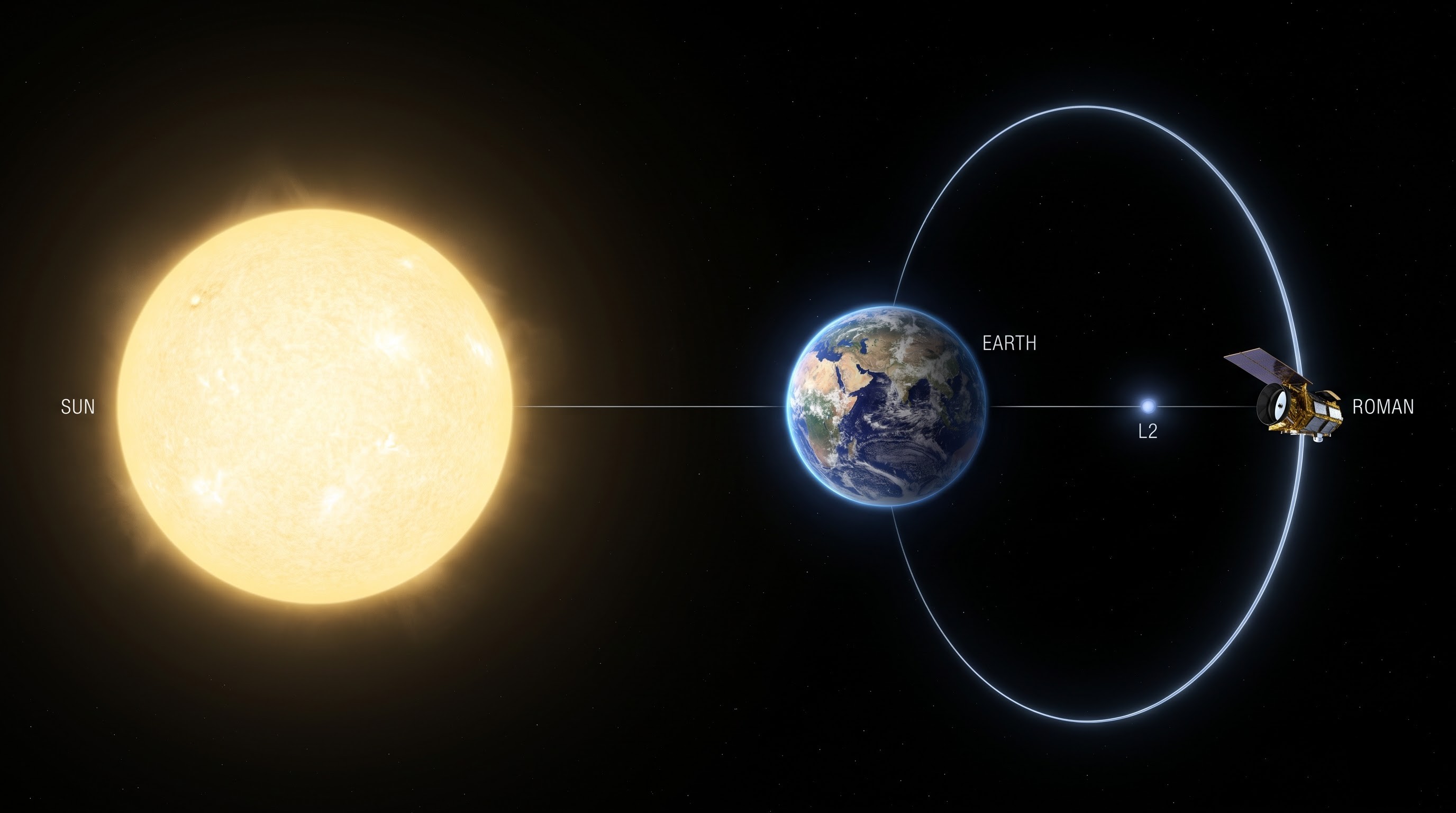
Launch is only the beginning of Roman’s journey. Over the next month, the observatory will travel roughly 930,000 miles from Earth to reach the Sun-Earth Lagrange Point 2, a stable gravitational parking spot already home to the James Webb Space Telescope.
Once it arrives, Roman will spend about three months going through checkout and calibration before its cameras begin serious science operations. From that point on, it is expected to keep observing for at least five years, with enough fuel on board to potentially extend the mission well beyond that.
A Telescope Carrying 1.35 Million Names
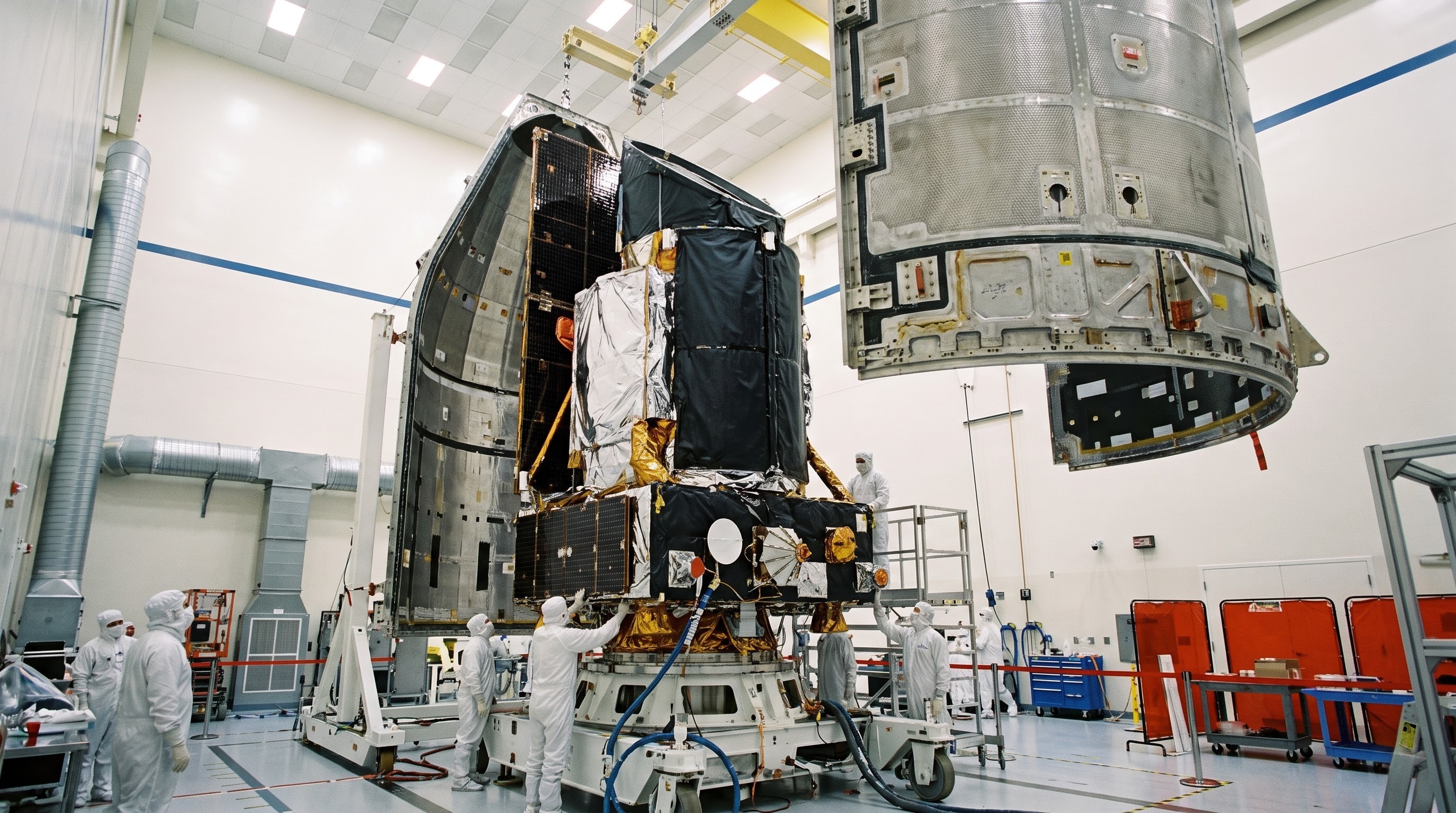
Roman also carries something more personal than instruments and mirrors. NASA invited the public to submit their names ahead of launch, and roughly 1.35 million people responded. Those names are now etched onto the spacecraft, riding along to Roman’s observation post nearly a million miles from home for as long as the telescope operates.
It’s a small detail, but it fits the mission. A telescope built to map the largest structures in the universe is also carrying, quite literally, the names of over a million ordinary people along for the ride.
Why Roman Is Named After Nancy Grace Roman
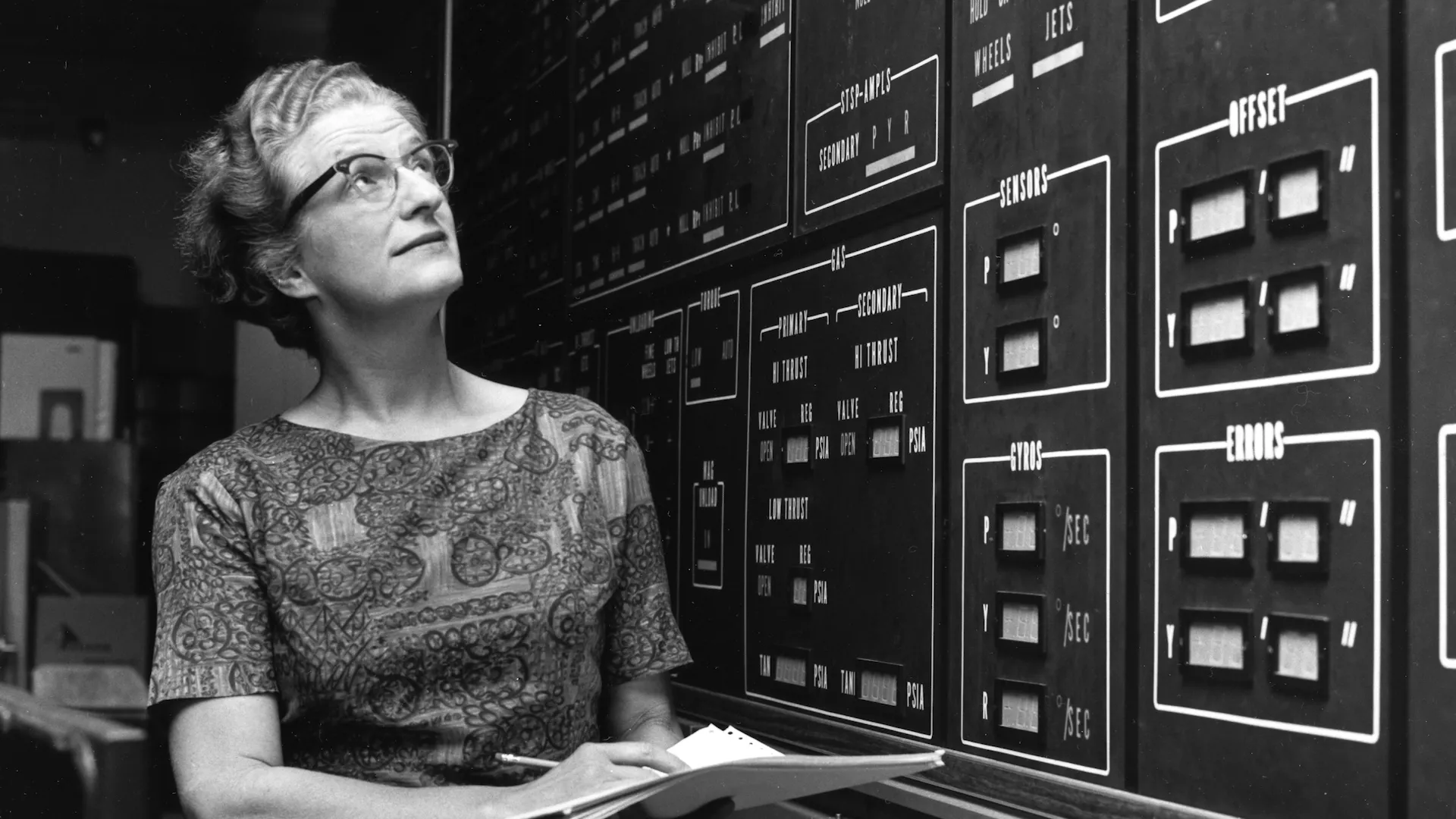
The mission is named for Nancy Grace Roman, NASA’s first chief astronomer, often remembered as the “mother of the Hubble Space Telescope” for the role she played in getting that mission approved and funded decades ago. It’s a fitting name for an observatory designed to build directly on Hubble’s legacy while dramatically expanding its reach.
What Happens Next
For now, all eyes are on the weeks ahead. Once Roman reaches L2 and completes its checkout period, the first images should begin arriving on Earth, and astronomers around the world will get their first real look at what a Hubble-sharp, 100-times-wider eye on the universe can actually do.
Written By

Satyam Patel
15-year-old space enthusiast and Founder of Solar System Explorers. I simplify space science for everyone.
thesatyamempire@gmail.com